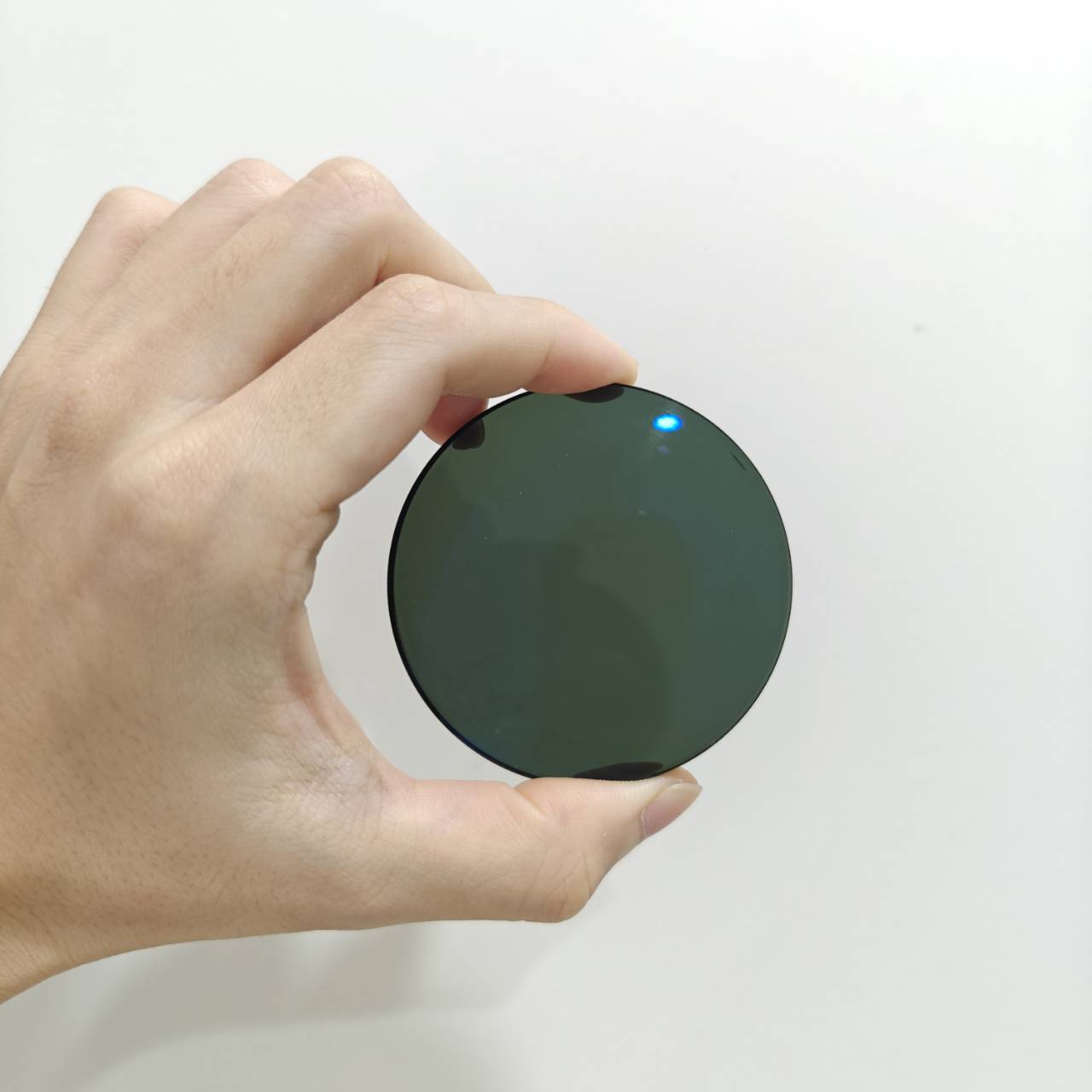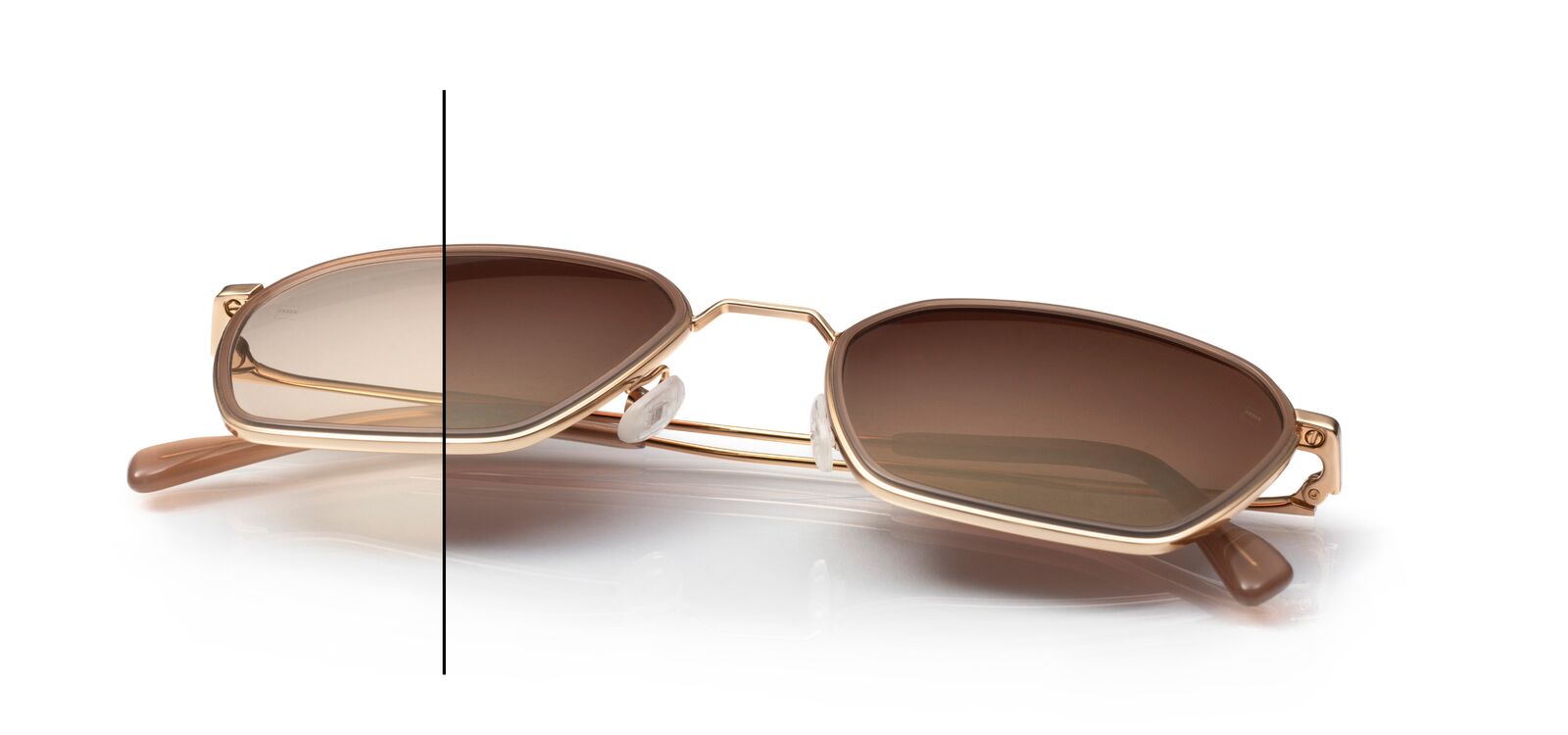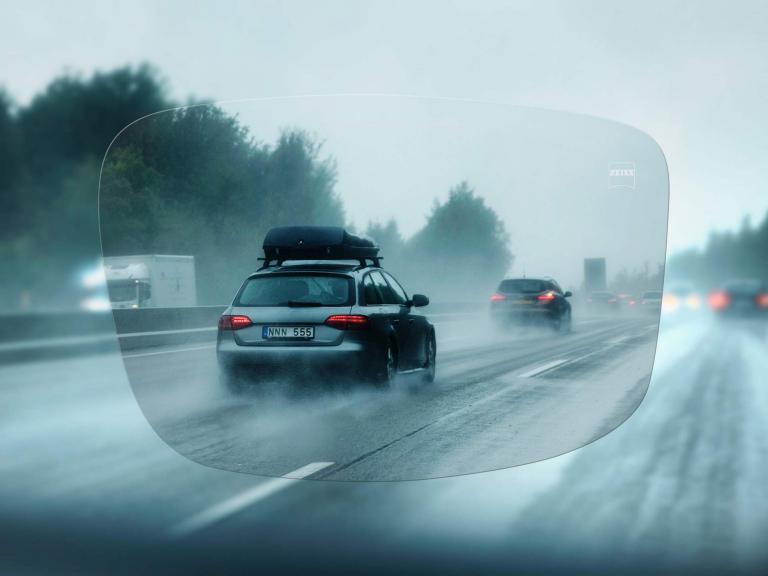


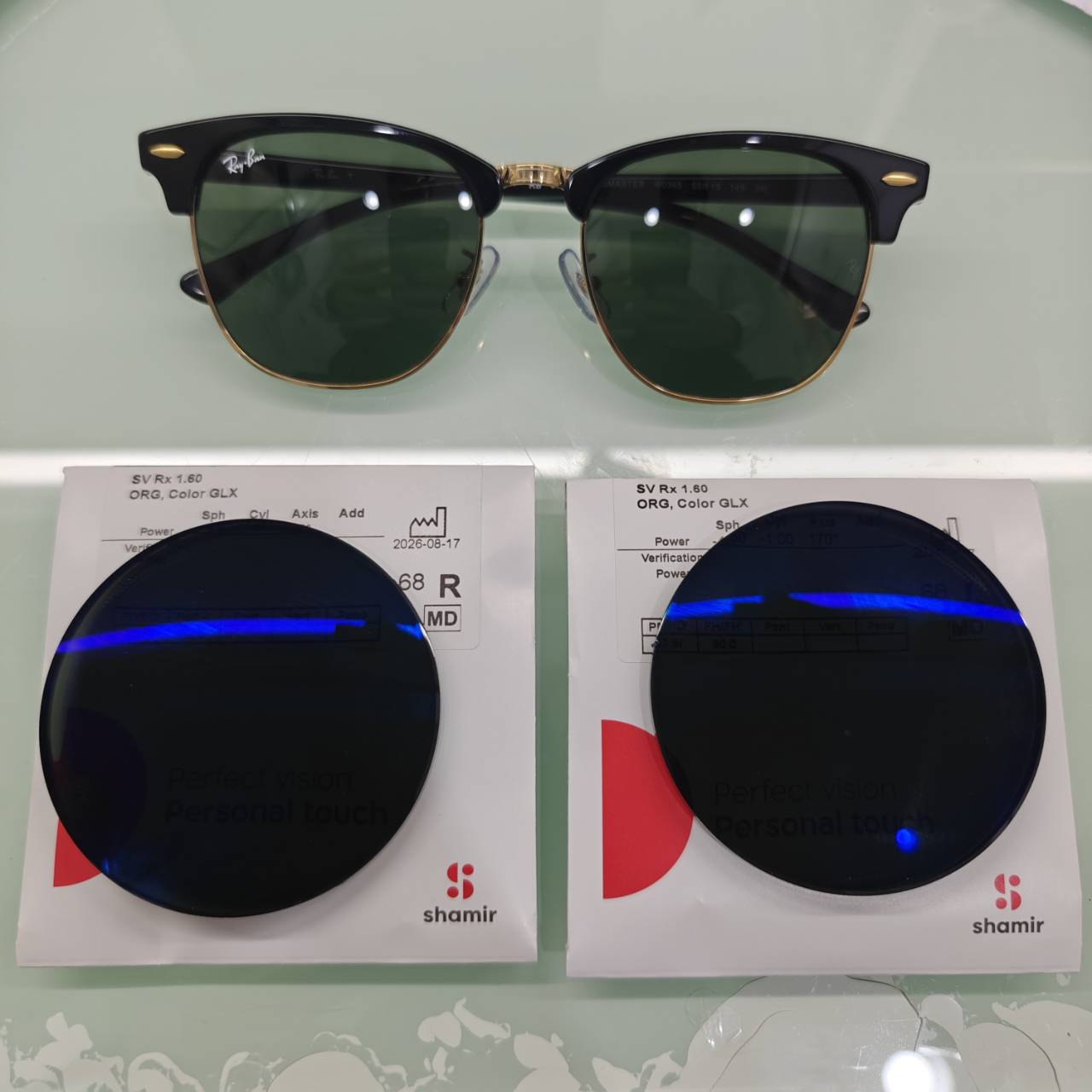
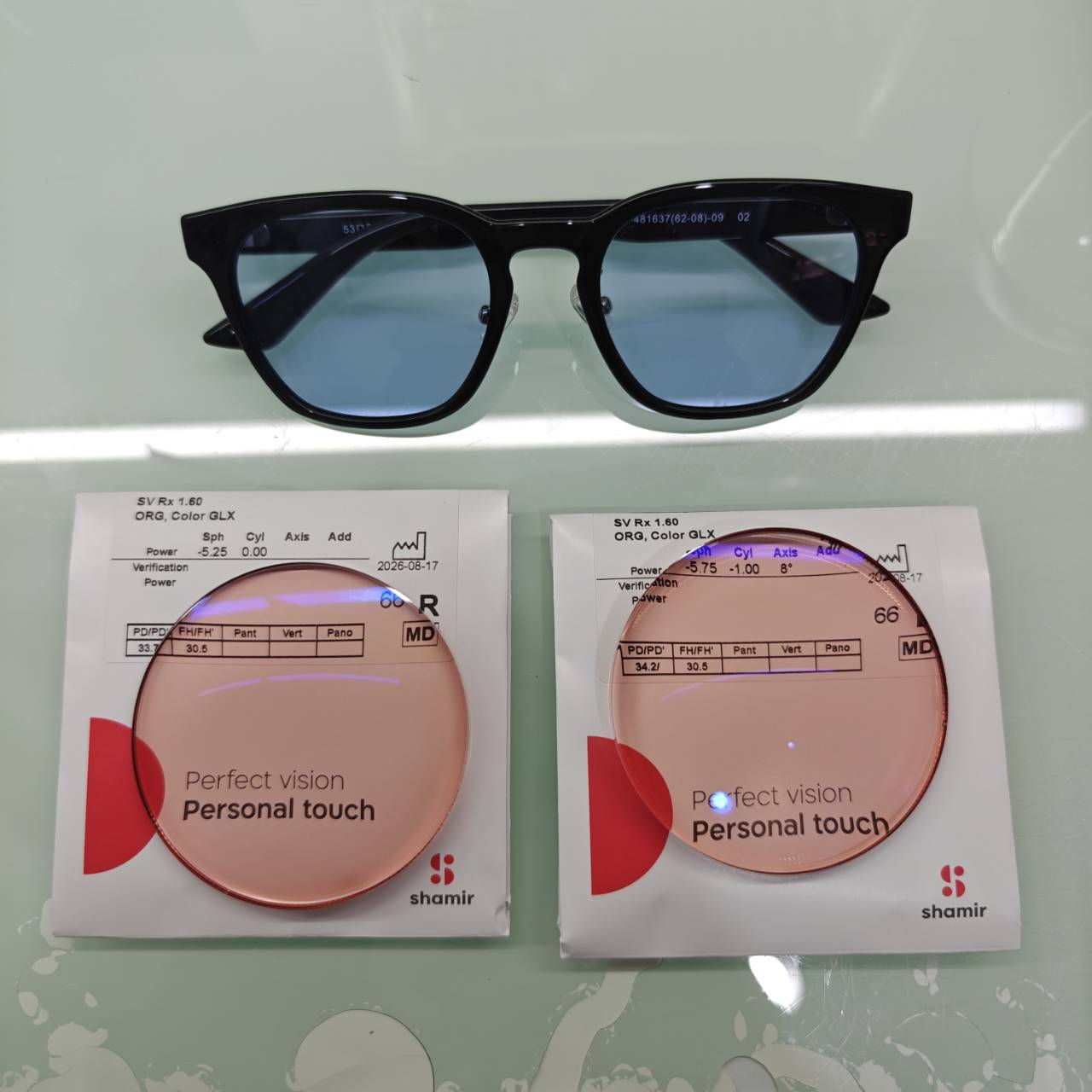
A true pair of prescription sunglasses starts the same way a pair of clear glasses does — a full eye exam, an accurate prescription, and a lens ground specifically to correct your vision. The difference is that the lens blank is also tinted or polarized before it's surfaced, so the same piece of glass or polycarbonate that corrects your eyesight also cuts glare and blocks UV. The tint and the prescription are built into one lens, fitted into a frame designed for sun use.
Cheap tourist-market sunglasses, and even many designer-looking pairs sold without any lens work, are usually flat, non-prescription lenses dropped into a frame — they do nothing for your eyesight and their UV coating quality is often unverified. Clip-on sun shields are a step up but still a compromise: they add weight and bulk over your existing glasses, can slip out of alignment, and rarely block glare as evenly as a lens made specifically for that frame.
Bangkok's UV index regularly sits in the "very high" to "extreme" range for most of the year — noticeably more intense than the UV exposure most people are used to in temperate countries. Non-prescription sunglasses or squinting without any UV filter at all means more cumulative exposure over years, which is linked to conditions like cataracts and other long-term eye damage. Wearing proper UV protection daily matters more here than it does back home.